
E-E-A-T in the Age of AI: Why Experience and Trust Now Decide Who Gets Seen

If you have spent any time near SEO in the last few years, you will have run into four letters that quietly shape a great deal of what ranks: E-E-A-T. It is a framework and an acronym for Experience, Expertise, Authoritativeness and Trust. Better hold on to your hat because AI has just made it matter far more than it used to.
Here is what it actually means, why it changed, and where I can help.
What E-E-A-T actually is
E-E-A-T lives inside Google's Search Quality Rater Guidelines, the document Google hands the thousands of human reviewers who judge whether its results are any good. E-E-A-T is not a “ranking factor” per se, not in the literal sense but rather it describes the kind of quality Google is trying to reward.
The four parts are simple enough:
- Experience: have you actually done, used, visited or lived the thing you are writing about?
- Expertise: do you have real knowledge or skill in the subject?
- Authoritativeness: are you, and your site, recognised by others as a go-to source?
- Trust: can people rely on the page, the site and the business behind it?
Google is clear that Trust sits at the centre and the other three feed into it. A page can be written by a genuine expert and still fail if the site looks shady, the claims are unsupported, or nobody can tell who is behind it.
Where the extra “E” came from
A bit of history: for years this was just E-A-T, introduced around 2014. Then in December 2022 Google added a second E, for Experience. It answered the real search ranking problem: brands and agencies producing technically correct content about things they had never actually touched. Experience captures what expertise alone cannot which is first-hand, lived involvement.
For example: a review written by someone who used a product for six months is simply worth more than one stitched together from other people's reviews.
Why AI made E-E-A-T matter more, not less
Then the shift happened, and not long ago. The web now is being flooded with competent, fluent, machine-written text. When anyone can generate a thousand passable words in seconds, fluency stops being a signal of quality and what becomes scarce, and therefore more valuable, is the stuff AI cannot fake.
Yeah, you guessed it: genuine Experience, verifiable Expertise, real Authority and demonstrable Trust.
Google has moved fast. In January 2025 it significantly expanded the rater guidelines, adding its first formal definition of generative AI and new spam categories aimed at “scaled content abuse”. Mass-produced AI content (AI slop) with no added value earns the lowest possible quality rating.
A further update in September 2025 added guidance on how raters should assess AI Overviews, the AI-generated summaries that now sit at the top of so many results. And as of June 2026, Google Seach Console have started adding Search Generative AI performance reports for some users.
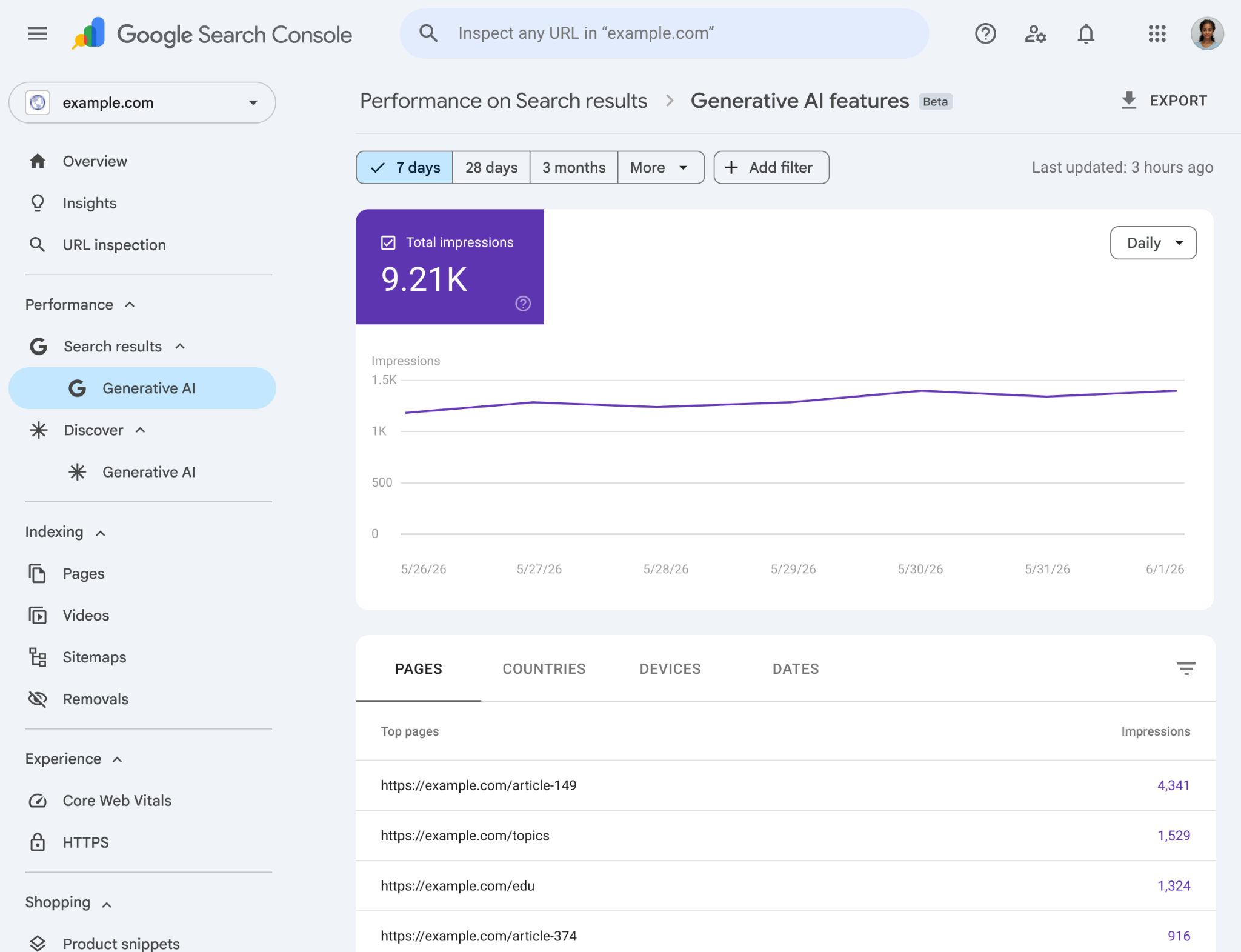
More and more, people get an answer without clicking anything because the AI summarises a few trusted sources instead. Being one of those cited sources is the new visibility, and E-E-A-T is how you earn it. One analysis of thousands of AI Overview citations found that pages with strong E-E-A-T signals were over twice as likely to be referenced. The irony is sharp: AI search rewards the most human content.
Using AI without wrecking your credibility
None of this means “do not use AI”. I use it every day, and I have written separately about how I stopped worrying and learned to use it. Google itself says AI-assisted content is fine; content built purely to game rankings is not. As its own guidance on creating helpful, people-first content puts it, the goal is to benefit people, not to manipulate search.
The line is human involvement and an AI cannot test a product or hold it in it's hands nor interview a customer satisfactorily (yet).
So the workflow that actually holds up is the one where AI drafts and accelerates, but a named, accountable person brings the experience, checks the facts and signs their name to it. Be transparent, keep a human expert in the loop, and AI becomes a multiplier rather than a liability.
How I can help
This is where my background is useful, because E-E-A-T is not a single job. It is part content, part technical, part strategy and I work across all three.
- Experience and content. I produce original, experience-led content customer stories, real examples and genuine insight rather than rehashed filler and structure pages so that experience is actually visible. This connects closely to my media production and content work.
- Authorship and authority. Clear author pages, bios and credentials, consistent named authorship, and the citations and external signals that tell Google a real, qualified person stands behind the page.
- Trust and the technical build. Much of Trust is structural: HTTPS, a real About page and contact details, sensible architecture, structured data, and fast, accessible pages. That sits squarely in SEO and technical territory.
- Search and demand alignment. E-E-A-T only pays off when it meets real search intent and a working pipeline behind it. See my posts on digital marketing and CRM and lead generation.
- Sensible AI workflows. I help set up the human-in-the-loop process so AI speeds you up without flattening your credibility.
If your traffic has softened, your content is not getting cited in AI results, or you simply want an honest audit of how trustworthy your site looks to both Google and AI search, that is the kind of work I do. You can see examples in my portfolio, book a free 30-minute intro call, or get in touch and tell me where it hurts.